At the ESA Ministerial 2025, ESA member states set the course for European space and innovation policy in the coming years. The member states pledged a total of 22.3 billion euros for upcoming ESA programs. Compared to the ESA Ministerial 2022, this represents an increase of approximately 31%.
Thus, the ESA member states are highlighting their commitment to strengthening Europe’s technological competitiveness and strategic independence.
However, the focus is no longer exclusively on the space industry. Many of the funded technologies are used in sectors such as mobility, energy, medical technology, agriculture, and industrial production. Accordingly, ESA programs may be of interest for an increasing number of companies.
Space as a driver of innovation
Space programs have always spurred technological developments that are now taken for granted. Navigation devices, weather satellites, modern sensor technology, and high-performance communication systems are just a few examples. Today, topics such as artificial intelligence, autonomous systems, cybersecurity, digital twins and sustainable materials are also at the center of many developments.
A catalyst for innovation & technology transfer — new opportunities for businesses
Through its decisions, ESA is specifically addressing new topics and investing in future-oriented fields. The additional funding will be used to expand existing ESA programs and launch new initiatives. These include, for example, programs for technology development and for strengthening European resilience.
The goal is to strengthen Europe’s technological competitiveness and turn innovations faster into market-ready applications. For companies, this means: new calls for proposals and funding opportunities for ambitious projects are emerging.
Additional funding will be allocated to, among other things:
Space technologies and technology transfer
Earth observation and climate applications
Satellite communications and navigation
Space safety
Science and exploration
Commercialization of new space solutions
Europe’s independent access to space
+++ ESA Ministerial 2025 — a brief explanation +++
What is it?
ESA Ministerial Council is the most important decision-making body of the European Space Agency (ESA). Every three years, the member states decide on the funding and strategic direction of the European space program and approve new programs as well as investments.
Why is this important?
The decisions taken provide a significant boost to innovation, technology transfer and Europe’s competitiveness. They promote the development of new technologies and their application far beyond the space sector.
Who can benefit?
Space companies
Small and medium-sized enterprises (SMEs)
Start-ups
Research institutions
Companies from non-space sectors integrating space technologies and data to develop new products, applications and services
What does this mean for your company?
The decisions made at the ESA Ministerial create new funding and collaboration opportunities. Companies that develop innovation projects early on can benefit from future ESA calls for proposals and tap into additional funding opportunities.
Innovations are no longer limited to the space sector
The decisions of the ESA Ministerial 2025 are also relevant far beyond the space industry. Many technologies originally developed for use in space are now finding their way into everyday business and driving innovation across a wide range of industries, from industrial manufacturing and medical technology to the energy and environmental sectors.
With the newly adopted ACCESS program, ESA is strengthening the commercialization of space technologies and supports companies to develop market-ready products, applications and services. The program consolidates existing funding opportunities and facilitates access to finance, technology transfer and new markets — particularly for startups, SMEs and established companies. This helps innovations move faster from concept to real-world application.
This is a unique opportunity, particularly for companies outside the space sector, to bring their innovative technologies into the space sector and to establish new markets and business areas.
Within this framework, EurA acts as an ESA Technology Broker and manages an own funding program, ESA Spark Funding — it’s worth taking a look. More information can be found at: SPARK FUNDING | ESA Tech-Broker.
Furthermore, within its space division, EurA manages the ESA Business Incubation Center in North Rhine-Westphalia on behalf of ESA and the Ministry of MWIKE.NRW. Interested founders can find more information on how to apply at: ESA BIC North Rhine-Westphalia - We will boost your space idea.
Current status: the implementation phase begins now
The decisions made at the ESA Ministerial initially established the financial and political framework. ESA is now working to gradually translate the approved programs into specific tenders and calls for proposals. Some programs will continue, while others will receive new budgets or be launched for the first time.
For companies, this means: Now is the right time to strategically prepare innovative projects. Those who start developing project ideas today, identify suitable partners, and define the appropriate funding pathway will be able to respond to new calls for proposals early on.
Getting started with ESA projects & our support
Do you have an idea and are looking for a suitable call for proposals? We can help you select appropriate ESA programs, provide information on the framework conditions and assist with the application process as well as with funding and project management. Feel free to reach out to us — we look forward to hearing from you.
Feel free to contact us at any time for a consultation on aerospace-relatedtopics .
Conclusion
The decisions made at the ESA Ministerial 2025 clearly show that space is now far more than a niche topic for a single industry. It is increasingly becoming a driver of innovation across various economic sectors and is creating new opportunities for technology transfer, collaboration and the development of marketable solutions.
Text: Bärbel Deisting
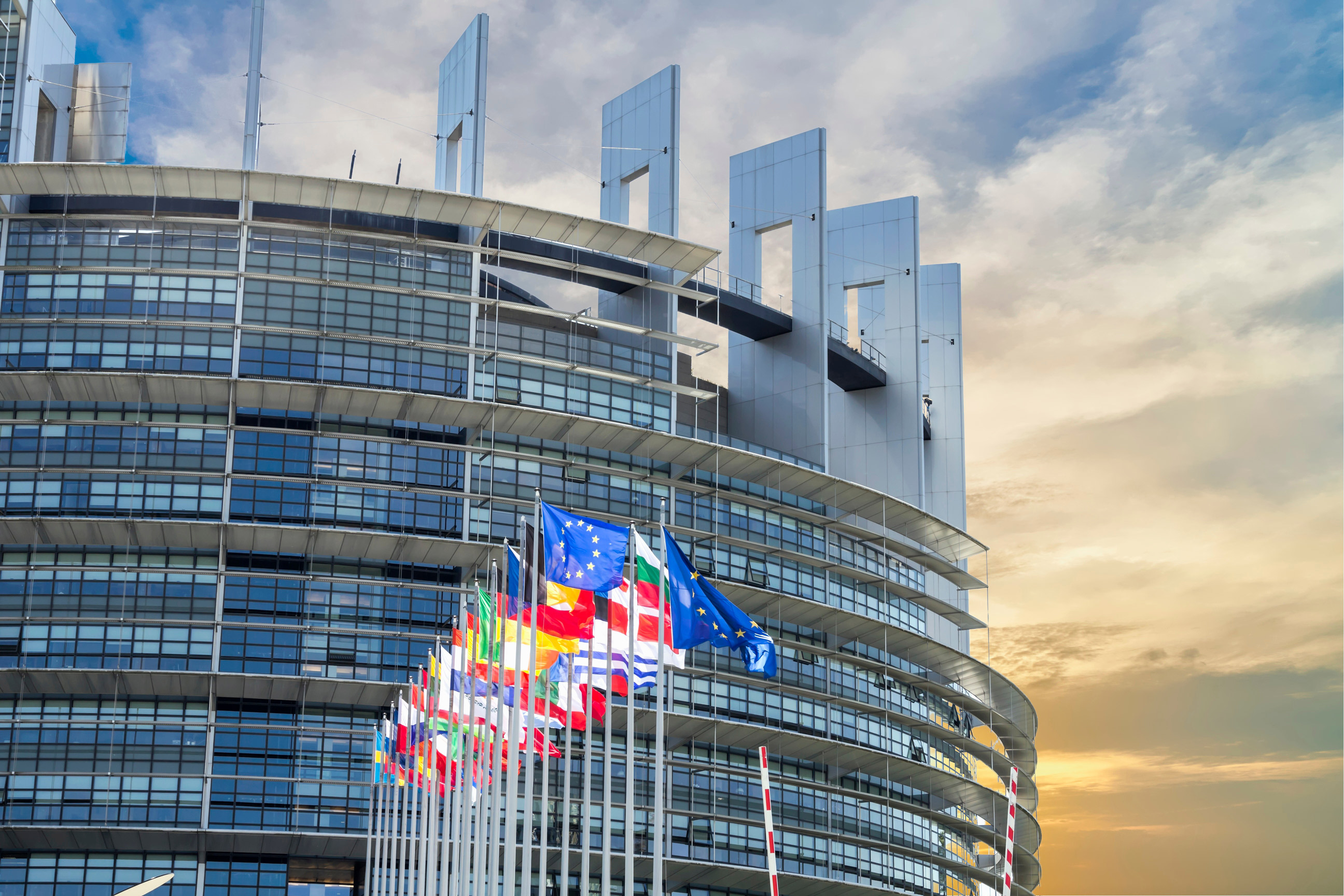
Image: ESA - D. Ducros
This content was created with AI support and has been editorially reviewed.
Did you enjoy this article?
If you liked the article, share it with your friends and colleagues on social media or by email.
Do you want to learn more about this topic? Schedule a meeting with an expert.
Bärbel Deisting, who holds a degree in mathematics, has been working as a Senior Manager for Space Applications, Aerospace & Defense at EurA AG in Munich/Ottobrunn since October 2025. Her path to this position began in academia: She studied mathematics at LMU Munich and is a certified mediator. After completing her studies, she worked at ISTA at the University of the German Bundeswehr in Munich in the field of satellite navigation and was involved in national and international projects. Until 2012, she was a member of the organizing committee for the Munich Satellite Navigation Summit and remained involved with both that event and the Munich Space Summit as a moderator even after leaving the organization. She then joined bavAIRia e.V. as Head of the Space and Space Applications Division, where she further expanded the space and space applications division. Until her departure, she also served as the German ESA Business Applications Ambassador. In addition to her work on international projects, she was Vice President and Treasurer of NEREUS, as well as a member of the scientific committee of the NAVIS Center in Hanoi, Vietnam. She is also a member of the Steering Committee of Space4Geo.
The Federal Ministry for Economic Affairs and Energy (BMWE) has published the third call for proposals under the Federal Funding Program for Industry ...
At first glance, the research allowance and public procurement law appear to be two separate issues. This is because the research allowance does not ...
Looking ahead to EDF 2027: Why businesses and research organisations should start preparing now The deadline for the European Defence Fund (EDF) for ...
Newsletter
Subscribe to our newsletter now and stay up to date!










EurA AG
T- 079619256-0Röhlinger Str. 24
73479 Ellwangen
info@eura-ag.com