- Julian Seethaler
- 10.07.26
- 2 min
- For SME, EIC Accelerator, EU funding programmes,
With an amendment to its 2026 work programme, the European Innovation Council (EIC) is, for the first time, allowing defence and dual-use ...



Alongside climate change, the loss of biodiversity is one of the most pressing environmental challenges of our time. What was long perceived primarily as a conservation issue is increasingly becoming an economic factor: according to the World Economic Forum, more than half of global GDP depends moderately or heavily on functioning ecosystems.
When soils lose their fertility, freshwater becomes scarce, or supply chains come under strain as a result of environmental change, economic risks follow. Consequently, financial institutions are taking a growing interest in these interconnections and increasingly factor them into their lending decisions.
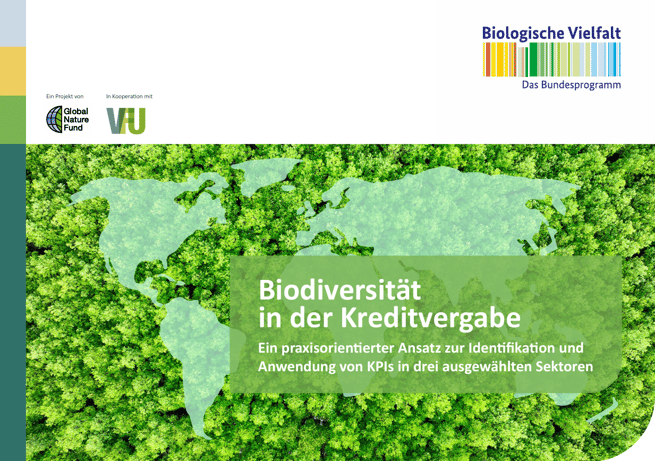 To harness the leverage of the financial sector and embed this issue in the real economy, the Global Nature Fund (GNF) and the Association for Environmental Management and Sustainability in Financial Institutions (VfU) have published a practical guide in December 2025. The guide was developed as part of the "Unternehmen Biologische Vielfalt" (UBi) project, funded by the Federal Agency for Nature Conservation and the Federal Ministry for the Environment, Climate Action, Nature Conservation, and Nuclear Safety.
The aim: to provide banks with a set of metrics that allow biodiversity considerations to be integrated into lending processes in a measurable and transparent way. Such metrics are particularly valuable for so-called sustainability-linked loans (SLLs) — loans whose interest rates are directly tied to the achievement of specific sustainability targets.
Many German financial institutions are still in the early stages of developing comprehensive biodiversity strategies. The guide provides the urgently needed tool for three particularly influential focus sectors: the agriculture and food industry, the real estate sector, and the chemical industry.
For banks, biodiversity is far more than a reputational or CSR consideration. Nature-related risks affect default risk, collateral values, business models, and entire loan portfolios. According to a 2023 analysis by the European Central Bank (ECB), around 72 per cent of companies in the euro area are highly dependent on at least one ecosystem service — such as clean water, fertile soils, or climate regulation. Those companies account for nearly three-quarters of all corporate loans.
Furthermore, regulatory pressure on the financial sector is also intensifying. At the global level, Target 15 of the Kunming-Montréal Agreement calls on signatory states to provide incentives for transnational corporations and financial institutions to disclose their biodiversity-related risks, dependencies, and portfolio impacts.
In Europe, sustainable finance regulations — as part of the European Green Deal — form the binding legal framework: requirements under the EU Taxonomy, the Corporate Sustainability Reporting Directive (CSRD), and the Sustainable Finance Disclosure Regulation (SFDR) are pushing financial institutions towards greater transparency.
This trend is equally visible in supervisory regulations: In January 2025, the European Banking Authority (EBA) published final guidelines on ESG risk management that explicitly address biodiversity and ecosystem risks alongside climate-related risks. These have been mandatory for most institutions since January 2026. In November 2025, the EBA followed up with final guidelines on scenario analysis for environmental risks. The ECB likewise expects institutions to systematically integrate material nature-related risks into their strategy, governance, and risk management frameworks.
The metrics presented in the "Biodiversity in Lending" guide are neither mandatory nor exhaustive. They do, however, give a clear sense of which topics banks may give greater weight to in future lending conversations.
For companies, they serve as a valuable frame of reference: helping to assess which data points will become important, where negative environmental impacts and associated risks sit, and in which direction to develop a biodiversity strategy. Methodologically, the metrics follow the so-called mitigation hierarchy: the overriding priority is always to avoid negative impacts from the outset—only then do reduction and restoration come into play.
Typical examples across the three focus sectors:
 Not every metric will be relevant for every company. Nevertheless, the examples illustrate the direction in which the conversation is heading.
Even though biodiversity requirements in lending are not yet widely established, preparing early pays off. A sensible first step is to understand your company’s current position, reduce risk exposure, and explore potential financing advantages.
The next step is to review existing data, identify gaps, and derive appropriate KPIs — building a solid foundation for a biodiversity strategy, reporting, bank discussions, and potential sustainability-linked loans.
A step-by-step approach is advisable:
The starting point is determining whether biodiversity is a material issue for your company. This applies particularly to companies in the agriculture and food industry, real estate, chemicals, industrial manufacturing, construction, and raw materials processing, as well as to companies with large land footprints, water-intensive processes, or nature-dependent supply chains.
Useful guiding questions include: What impact does the company have on nature and ecosystems? Where do dependencies exist? What risks arise for locations, supply chains, or investment plans? A structured materiality assessment provides the foundation for answering these questions. The analysis also delivers broader benefits for the company's sustainability strategy: ↗ Click here to find out more.
Building on this, it should be reviewed which data is already available. Much of it often already exists — for example, within environmental management systems, supplier assessments, site records, hazardous substance registers, waste, water and emissions data, land-use plans, or sustainability reports. The key question is whether this data is reliable, verifiable, and comparable over time.
It is also worth establishing which reporting framework best fits the company. For companies subject to mandatory reporting, biodiversity falls under the CSRD and ESRS E4, provided it is identified as a material topic. For small and medium-sized enterprises, the voluntary VSME standard — to be redesignated as the Voluntary Standard (VS) in its forthcoming revision — can offer practical guidance, particularly when banks or larger clients are requesting sustainability information. The EU Taxonomy may also be relevant, depending on the company's activities and project context.
For any planned financing, early engagement with your primary bank can be beneficial — providing an opportunity to assess whether biodiversity-related measures could form part of the financing structure or serve as the basis for a sustainability-linked loan.
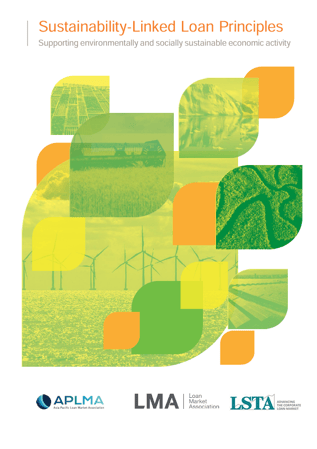
A key point to bear in mind: KPIs need to be more than well-intentioned. They should be material to the company's core business and sustainability strategy, measurable, externally verifiable, and capable of being benchmarked against relevant industry standards — these are the central requirements set out in the official Sustainability-Linked Loan Principles by the Loan Market Association, APLMA, and LSTA.
When a new loan or significant investment project is on the horizon, it may also be worth developing a bespoke sustainability-linked loan framework. This allows companies to secure more favorable loan terms by achieving biodiversity targets — a financial incentive that helps offset the costs of their own transformation efforts.
Although biodiversity-related metrics have not yet been widely established in lending practices, current developments in the sustainable finance landscape clearly show that nature-related risks and biodiversity considerations are gaining increasing importance. Companies that address suitable indicators and management metrics at an early stage therefore lay a solid foundation for upcoming requirements and are well positioned to seize opportunities arising from the further development of sustainable financing instruments.
For those wishing to explore designated funding options in parallel, green bonds offer a complementary route.
As part of the nationwide Ubi project, EurA has joined the Thuringian alliance for biodiversity "Bündnis für Biodiversität Thüringen" — an initiative launched by the Sustainability Agreement of Thuringia (NAT), the Thuringian Chambers of Industry and Commerce, and DIHK Service GmbH. Through this involvement, we remain closely connected to emerging developments, practical insights and best practices in the field of biodiversity.
Here is how we can help: together with you, we assess the materiality of biodiversity to your business model, locations, supply chains, and financing projects. Building on this, we identify the relevant data requirements and develop a pragmatic roadmap tailored to your company’s size, sector, and the frameworks applicable to you, such as VSME, CSRD, or the EU Taxonomy.
We also provide targeted support for financing discussions: from identifying appropriate metrics and assessing biodiversity-related risks and opportunities, through to developing a customised SLL framework in line with the current Sustainability-Linked Loan Principles.
Our approach is deliberately practical. Not every company needs a comprehensive biodiversity strategy straight away. However, every company whose business model, supply chains or investments are influenced by environmental issues should understand its own risks, opportunities and areas for action. After all, biodiversity considerations and nature-related risks are playing an increasingly important role in financing, regulation and value chains.
Would you like to know how biodiversity affects your company, your financing options, or future bank requirements? We can help you identify relevant risks and opportunities early on and determine the appropriate next steps.
→ Klick here and get in touch with our sustainability and biodiversity experts.
Further information:






EurA AG
T- 079619256-0Max-Eyth-Straße 2
73479 Ellwangen
info@eura-ag.com